
Causes of scoliosis
- Idiopathic — the most common type; the cause is unknown and it often develops around age 10–14 during growth spurts.
- Neuromuscular — associated with conditions such as cerebral palsy, polio and spina bifida.
- Congenital — resulting from spinal abnormalities present at birth.
- Non-structural — from leg-length difference, pain, or poor posture.
Recent studies have also explored a potential link between vitamin D deficiency and the severity of spinal curvature.
Two ways to screen at home
Posture screen — look for a head tilt with uneven ear heights, the body leaning to one side, uneven shoulder height, asymmetrical shoulder blades, or one hip higher than the other.
Forward bending test — stand with feet together, place palms together with arms straight, and bend forward with fingertips pointing between the big toes. One side of the back being higher can be a sign of scoliosis.
How is scoliosis diagnosed?
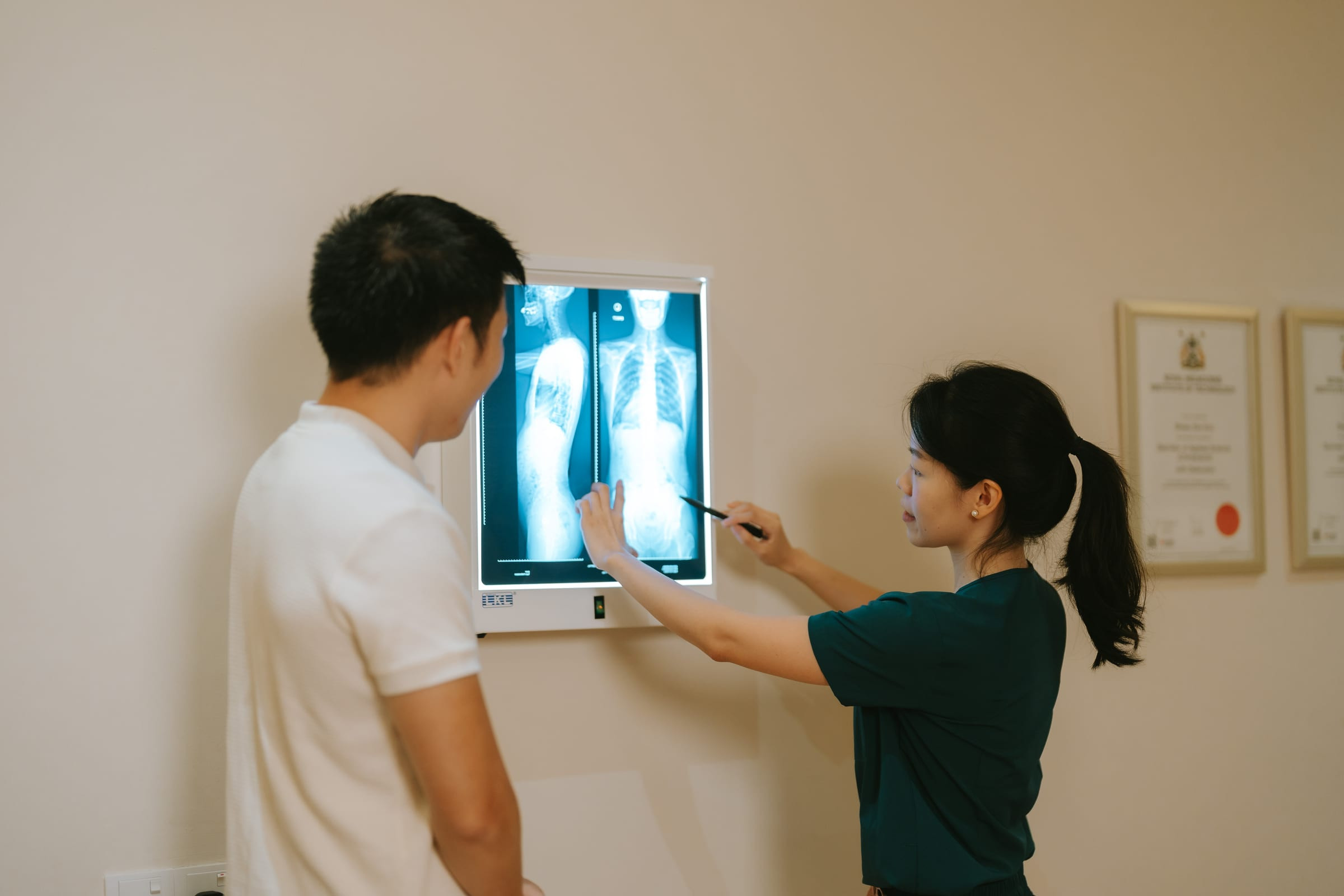
An X-ray of the spine is typically used to assess the curvature and determine its degree. During your visit, we take a detailed health history, explore any physical or emotional stressors, and perform a thorough spinal and postural examination.
How chiropractic can help
- Help prevent the curve from getting worse
- Slow the ageing and wear of spinal joints
- Improve how your spine and nervous system function
- Relieve tension or pain in the neck, shoulders and lower back
With the right management, pain can often be prevented, and we can significantly improve a child's quality of life and psychological wellbeing.